

Most people lose at online casino games and sports betting for the same boring reason. It isn't bad luck, rigged software, or a cold deck. It's that they never decided, in advance, how much money they were willing to lose. Ask ten players at a blackjack table what their session budget is and eight of them will shrug. That shrug is why casinos keep the lights on.
This isn't a moral lecture. Gambling is entertainment, and there's nothing wrong with paying for entertainment. But if you're going to play slots, poker, or bet on football, you should at least play like someone who understands the math. Here's how to do that without sucking the fun out of it.
The House Edge Is Not Negotiable
Every game you can play has a built-in mathematical advantage for the operator. That's not a conspiracy; it's how the business model works. What matters is how big that edge is, because a 1% edge and a 15% edge are completely different animals over a few hundred bets.
Some rough numbers worth memorizing:
- Blackjack (basic strategy): around 0.5% house edge, sometimes lower at tables with favorable rules.
- Baccarat (banker bet): about 1.06%.
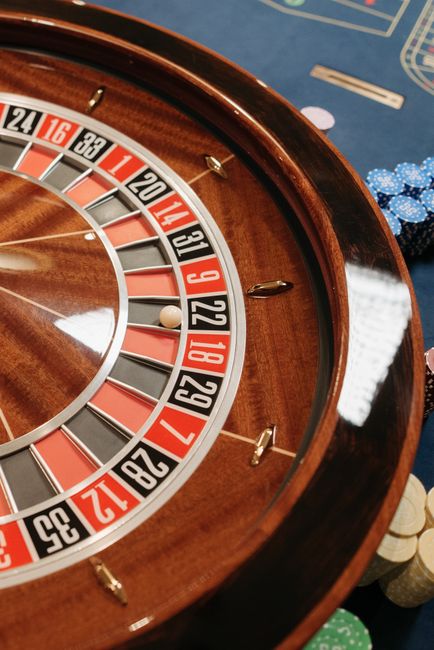
- European roulette: 2.7%. American roulette with the double zero jumps to 5.26%.
- Video poker (Jacks or Better, perfect play): under 1%.
- Slots: typically 2% to 10%, depending on the machine and jurisdiction.
- Sports betting: roughly 4-5% on a standard -110 line, less if you're line shopping.
Notice the pattern. Games where you make decisions — blackjack, poker, video poker, baccarat with a brain — give you a fighting chance. Games where you push a button and hope — most slots, keno, wheel of fortune spins — extract the most. That doesn't mean slots are bad. It means you should treat them like buying a lottery ticket with better odds, not like an investment strategy. xoilac offers a practical breakdown of the topic.
Why Your Session Budget Beats Your Bankroll
Every gamer has heard the word "bankroll," usually from a poker player explaining why they're not technically broke. But for casual iGaming players, the more useful concept is the session budget: the amount of money you're prepared to lose in a single sitting without it affecting your mood, your rent, or your relationships.
Here's a decent rule of thumb. Your session budget should be no more than 5% of your monthly fun money. If you have $400 set aside each month for entertainment, your session budget is $20. That sounds small, and that's the point. It forces you to play games where $20 lasts a while instead of games where one spin eats it.
Two more numbers to keep in your head:
- Bet size should be 1-2% of your session budget. A $20 session means $0.20 to $0.40 spins. If that feels too slow, your session budget is too small — raise the budget or lower the stakes.
- Set a stop-loss and a target. Decide you'll quit at -100% (obviously) but also at +200% or +300%. Taking profits is the single most underrated skill in gambling.
Slots Are Not All Created Equal
The slots industry has changed enormously in the last decade, and most players haven't adjusted. Older mechanical slots with three reels and a single payline often had RTPs in the 95-97% range. Modern video slots with 243 ways to win, expanding wilds, and cascading reels often sit closer to 94-96%. Some branded games — you know the ones tied to TV shows and movies — dip below 92%.
Where do you find the RTP? In the UK and most regulated European markets, it has to be published in the game's help screen or information tab. In the US, it varies by state. Look for it. A 94% RTP game and a 96% RTP game don't feel different in a five-minute session, but over thousands of spins the difference is enormous.
Also understand volatility. High-volatility slots pay rarely but can pay huge. Low-volatility slots pay frequently but small. Neither is better; they just serve different moods and budgets. A high-volatility slot with a $20 session budget is a recipe for a ten-minute session and a bad attitude.
Poker Is the One Game Where Skill Actually Wins
Poker is different, and it's worth saying out loud. In cash games against weak opponents, a good player can genuinely earn money over time. But "over time" is doing heavy lifting there. Variance in no-limit hold'em is brutal. A winning player can lose for a month. A losing player can win a tournament and post a screenshot.
A few things casual poker players should internalize:
- Play fewer hands than you want to. Most beginners play three times too many.
- Position matters more than cards. Acting last is a real, quantifiable edge.
- Track your results. Not to feel good, but because memory is a liar.
- Move down in stakes when you're losing. Moving up to "win it back" is how bankrolls die.
And if you're playing online poker in a regulated market, remember that the players at your table might be using solvers and HUDs. That's not cheating — it's just a different game than the one your uncle played in 2004.
Bonuses, Free Spins, and the Fine Print
Welcome bonuses are marketing. That doesn't make them worthless, but they're not free money. The value depends entirely on the wagering requirements and the game contribution rates.
A typical offer: 100% match up to $200 with 35x wagering on the bonus. That means if you deposit $200 and get $200 bonus, you need to wager $7,000 before withdrawing anything. If slots contribute 100% and table games contribute 10%, your bonus is worth very different amounts depending on what you play.
Before claiming any bonus, check three things:
- Wagering requirement multiplier
- Which games contribute, and at what percentage
- Maximum bet allowed while clearing the bonus (usually $5 or equivalent)
Break rule number three — bet $20 on a slot while clearing — and the casino can void your winnings. Read the terms. It takes four minutes.
Walking Away Is the Whole Game
Here's the truth that no affiliate site will tell you: the moment you stop playing is the only moment you're guaranteed to keep your money. Every spin, every hand, every bet puts your balance at risk in exchange for entertainment. That's the deal.
So make the deal consciously. Decide before you log in how much you're spending, how long you're playing, and what you'll do afterward. Set a timer. Use the deposit limits most licensed operators now offer — they're not there to trick you, they're there because regulators forced the industry to build them. Use them.
If you ever find yourself chasing losses, lying about your play, or gambling with money you need for something else, stop. This stuff is supposed to be fun. If it isn't, it's not a game anymore.
The players who last in iGaming — the ones who treat it as a hobby rather than a hustle — aren't smarter than everyone else. They just figured out early that the only bet you're guaranteed to win is the one you don't make when you're tilted.






John Doe
14 January, 2022Having no content in post should have adverse..
Chauffina Carr
10 April, 2022We use these tests all time! Killer stuff!
Jim Séchen
16 July, 2022Thanks for all the comments, everyone!